
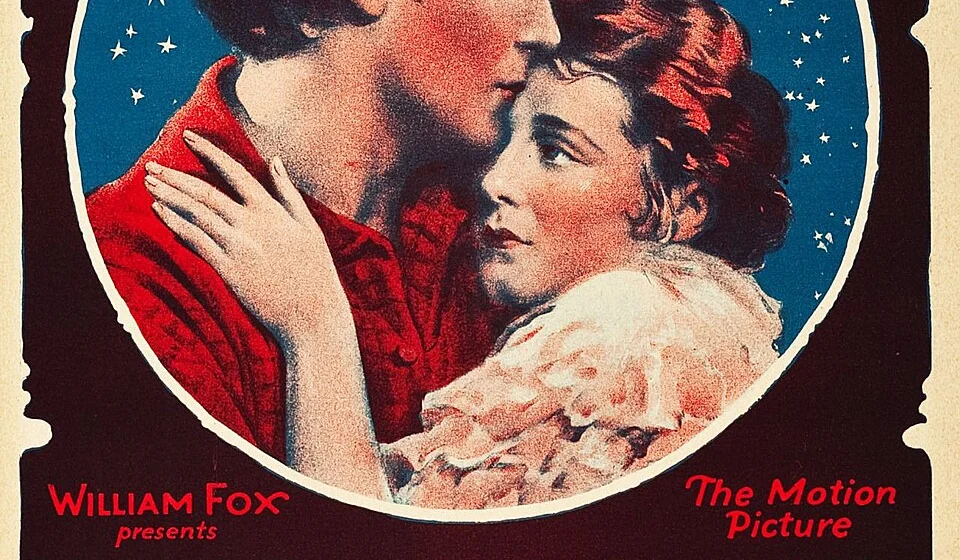

《第七天堂》以巴黎底層生活為背景,講述兩個被命運推到社會邊緣的人,在困苦與戰亂陰影下相遇,並從一段意外的共同生活中找到愛與希望。
7th Heaven follows two lonely people living on the margins of Paris whose unexpected meeting develops into a powerful love story. Against poverty, social hardship and the approaching First World War, their relationship becomes a quiet search for dignity, hope and a better life.
電影內容|中文版本
《第七天堂》是1927年由法蘭克・鮑沙其(Frank Borzage)執導的美國浪漫劇情電影,改編自奧斯汀・斯特朗(Austin Strong)的同名舞台劇,由珍妮特・蓋諾(Janet Gaynor)及查爾斯・法瑞爾(Charles Farrell)主演。故事設定於第一次世界大戰前夕的巴黎,男主角奇科(Chico)是一名在城市下水道工作的工人,他生活在社會底層,卻不甘於永遠困在地下,希望有一天可以成為街道清潔工,離開黑暗的下水道,真正看見天空。女主角黛安(Diane)則生活在另一種困境之中,她受到姐姐娜娜(Nana)的虐待,甚至被迫面對貧窮、暴力以及社會對她身份的偏見。一次衝突中,奇科出手救下黛安,而當警察到場準備把她帶走時,奇科為了保護她,突然聲稱黛安是自己的妻子。這個原本只是為了解圍而說出的謊言,卻讓兩人的命運開始產生真正的交集。為了維持這個身份,黛安跟隨奇科生活,兩個原本毫無關係的人,被迫分享一個簡陋的居所,也因此開始逐漸了解對方。奇科最初對黛安保持距離,甚至認為自己只是在履行一個承諾;黛安則因長期受到傷害而缺乏自信,不相信自己值得被愛。可是隨着兩人的相處,彼此之間慢慢建立信任,原本假裝的夫妻關係也逐漸變成真正的感情。電影其中一個重要的意象,是「由地下走向天空」的階梯。奇科身處下水道,黛安則被困在自己的生活與社會身份之中,兩人都像被困在城市最底層的人。然而愛情讓他們開始相信,人生並不一定要停留在原來的位置。「第七天堂」並不單純是一個浪漫的地點,而更像是一種精神上的高度,是兩個人從絕望走向希望的象徵。當第一次世界大戰爆發,奇科被徵召入伍,兩人的生活再次受到外在世界的力量打亂。原本只屬於兩人的小小天地,突然面對戰爭帶來的分離與死亡威脅,愛情也因此不再只是日常生活中的陪伴,而成為兩人抵抗命運的重要力量。影片透過默片特有的畫面、字幕、演員表情與肢體動作來推進故事,沒有依靠現代電影常見的大量對白,而是將情感集中在人物的眼神、動作和空間關係之中。珍妮特・蓋諾的黛安具有脆弱而堅韌的一面,而查爾斯・法瑞爾的奇科則由冷漠逐漸變得溫柔,兩人的表演構成電影最重要的情感核心。《第七天堂》表面上是一部愛情電影,但其內容同時涉及階級、貧窮、尊嚴、希望、戰爭以及人在困境中尋找新生活的願望。影片最值得注意的地方,是它沒有把愛情單純處理成浪漫幻想,而是將愛情放在現實環境之中:人物沒有優越的出身,也沒有理想化的生活,他們只是兩個努力尋找自身位置的人。電影因此呈現出一種典型1920年代默片的浪漫劇情風格,把個人感情與時代環境結合起來。1927年上映後,《第七天堂》成為福斯電影公司當時的重要作品,並在第一屆奧斯卡金像獎中獲得包括最佳影片提名、最佳導演、最佳女主角及最佳改編劇本等肯定。珍妮特・蓋諾更憑本片以及《日出:兩個人的故事》和《街頭天使》的演出,成為首屆奧斯卡最佳女主角得主。電影後來亦曾重新發行同步音效版本,並於1937年由亨利・金執導、詹姆斯・史都華及西蒙・西蒙主演的版本重新改編。今天再看《第七天堂》,它不只是一部早期電影史上的經典愛情作品,也是一部可以讓觀眾理解默片時代如何利用影像表達情感的作品。它把「從地下走向天空」變成一個關於人生的電影寓言:即使一個人身處城市最黑暗的角落,也可能因為另一個人的出現,而重新相信自己仍然有向上的可能。
English Version
7th Heaven is a 1927 American romantic drama directed by Frank Borzage and starring Janet Gaynor as Diane and Charles Farrell as Chico. Based on Austin Strong’s stage play, the film places its characters in Paris during the years leading up to the First World War and follows two people whose lives begin at very different points but are both marked by hardship and isolation. Chico is a sewer worker who has little status or money, yet he refuses to accept that his life must remain underground. He dreams of becoming a street cleaner, a modest ambition that nevertheless represents something much larger to him: the chance to work in the open air, see the sky and move towards a more respectable life. Diane, meanwhile, is trapped in an abusive and unstable home. She is mistreated by her older sister Nana and has been pushed into a life that leaves her vulnerable to poverty, violence and social judgement. Their paths cross when Chico intervenes to protect Diane from her sister. When the police arrive, Chico suddenly claims that Diane is his wife, creating a story that is initially intended only to save her from arrest. The lie changes both of their lives. Diane is allowed to remain with Chico, and the two begin sharing his modest home. What begins as an arrangement becomes an unexpected relationship. At first, Chico keeps an emotional distance from Diane. He sees himself as someone who has simply done the right thing in a difficult situation, while Diane has so little confidence in herself that genuine affection seems almost impossible for her to believe. Their relationship gradually changes through everyday moments rather than grand declarations. They begin to understand one another, and the false marriage slowly develops into genuine love. The film’s title carries a symbolic meaning throughout the story. Chico’s life underground and Diane’s troubled existence both place them metaphorically at the bottom of society. Their small home high above the streets becomes a private world separated from the difficulties surrounding them. The journey from the sewer towards the sky therefore becomes a visual and emotional metaphor for hope, dignity and personal transformation. The idea of climbing upwards is not simply about wealth or social success. Instead, it suggests that people can rise emotionally and spiritually even when their circumstances remain difficult. Their happiness, however, cannot remain untouched by history. As the First World War approaches, the private world that Chico and Diane have created is threatened by events far beyond their control. Chico is eventually called away to serve in the war, turning their love story into one shaped by separation, uncertainty and fear. The war does not replace the romance as the central subject of the film; rather, it tests the strength of the bond that the two characters have built. Borzage’s direction is particularly suited to the silent-film form because emotion is carried through faces, gestures, movement, visual composition and intertitles instead of spoken dialogue. Gaynor’s performance presents Diane as vulnerable but increasingly confident, while Farrell’s Chico develops from a guarded and somewhat cynical man into someone capable of genuine tenderness. Their chemistry became one of the defining features of the film, and the two actors would eventually appear together in many more productions. Although 7th Heaven is often described as a romance, its themes extend beyond love. The film explores poverty, class, social exclusion, personal dignity, courage and the human desire to escape circumstances that seem permanent. Its romantic story is therefore closely connected to the characters’ search for a better existence. Neither Chico nor Diane begins the story with power or privilege. What they possess is the possibility of changing one another’s lives. This makes the film characteristic of Borzage’s romantic cinema, in which love can become a force capable of giving ordinary people a sense of meaning in an uncertain world. The film was also significant in the development of Fox Film Corporation and became one of the major successes of its period. At the first Academy Awards, it received nominations including Outstanding Picture, while Borzage won Best Director, Gaynor won Best Actress and Benjamin Glazer won for Adapted Screenplay. Gaynor’s award also recognised her performances in Sunrise: A Song of Two Humans and Street Angel, making her the first recipient of the Academy Award for Best Actress. Although originally released as a silent film, 7th Heaven was later reissued with a synchronized Movietone musical score and sound effects, while still relying on English intertitles rather than audible dialogue. The film was remade in 1937 with James Stewart and Simone Simon, but the 1927 production remains closely associated with the silent-era performances of Gaynor and Farrell. Nearly a century later, 7th Heaven remains an important example of how silent cinema could communicate emotional intensity without conventional spoken dialogue. Its central image of moving from darkness towards the sky gives the romance a broader meaning: love becomes a way for two isolated people to imagine that their lives can be different from what society has told them they must be.
電影資料|Film Information
導演:Frank Borzage(法蘭克・鮑沙其)
類型:Romantic Drama、Silent Film、Melodrama
上映年份:1927
主要演員
Janet Gaynor|Diane
Charles Farrell|Chico
Ben Bard|Colonel Brissac
Gladys Brockwell|Nana
David Butler|Gobin
作品特色|中文版本
《第七天堂》將愛情、階級與希望放進1920年代默片語言之中,以巴黎地下世界與高處居所形成鮮明對比。電影透過光影、表情、字幕與空間構圖呈現人物情感,「由下水道走向星空」成為全片最具代表性的視覺與精神象徵。
Highlights|English
7th Heaven combines romance, social hardship and hope through the visual language of silent cinema. Its contrast between the underground world and the open sky gives the story a strong symbolic structure, while Gaynor and Farrell communicate the growing intimacy between their characters through expression, movement and gesture rather than conventional dialogue.