
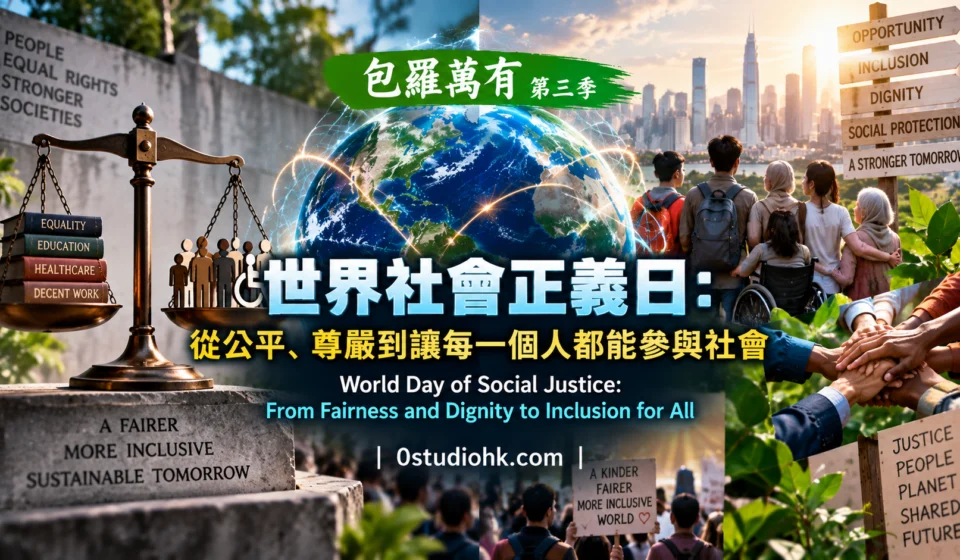
每年2月20日是世界社會正義日,提醒世界關注貧窮、不平等、就業、社會保障與包容等共同議題。
Every February 20, World Day of Social Justice draws attention to poverty, inequality, decent work, social protection and inclusion, encouraging action toward a fairer society.
中文版本
每年2月20日是「世界社會正義日」(World Day of Social Justice),由聯合國大會於2007年11月26日宣布,並自聯合國大會第63屆會期開始每年舉行。這個日子的設立,是希望世界各地更加關注社會正義,思考如何減少貧窮、不平等、歧視及社會排斥,並讓更多人能夠公平地參與經濟、社會及公共生活。聯合國在2026年的世界社會正義日,以「Renewed Commitment to Social Development and Social Justice」為主題,即「重新承諾社會發展與社會正義」,並把焦點放在第二次世界社會發展峰會後的新階段,以及2025年通過的《多哈政治宣言》。 社會正義並不只是法律上的公平,也不只是討論收入差距。它涉及一個人是否有機會接受教育、找到工作、獲得合理的工作條件、享有社會保障、參與社會,以及在遇到困難時是否有基本的支援。對一個社會而言,如果經濟增長只令部分人受益,而另一部分人長期被排除在發展之外,經濟數字的改善未必能夠轉化成所有人的生活改善。因此,聯合國把消除貧窮、充分及生產性的就業、人人享有體面工作,以及社會包容視為社會發展的重要互相關聯支柱。 工作是社會正義其中一個重要部分。對很多人而言,工作不只是收入來源,也是建立生活、家庭和社會參與的重要基礎。一份工作是否安全、是否有合理待遇、是否受到基本勞工權利保障,都會直接影響一個人的生活質素。聯合國可持續發展目標第8項亦提出,要促進持續、包容和可持續的經濟增長,實現充分及具生產力的就業,以及人人享有體面工作。 然而,現代勞動市場正快速改變。數碼化、人工智能、自動化、綠色轉型以及零工經濟,正在重新塑造人們工作的方式。新的科技可以創造新的職位和商業模式,也可能令部分傳統職位消失,或者令一些工作變得更加不穩定。對社會而言,真正的挑戰並不是阻止所有改變,而是在改變發生時,讓不同年齡、教育背景和經濟條件的人都有機會適應。2026年世界社會正義日的相關內容亦特別提到,需要加強年輕人的機會、推動性別平等、協助非正式經濟轉向正式經濟,並確保數碼及綠色經濟轉型具有公平和包容性。 社會保障也是社會正義的重要基礎。人生不可能永遠處於穩定狀態,一個人可能因失業、疾病、年老、家庭責任或其他突發情況而失去收入。如果社會完全沒有安全網,原本只是短期的困難,便可能迅速演變成長期貧窮。社會保障的作用,就是在不同人生階段提供一定程度的保護,讓人即使面對風險,也不至於完全失去維持基本生活的能力。聯合國近年的資料顯示,全球社會保障覆蓋率有所增加,但仍有大量人口沒有得到充分保障,這說明社會正義仍然是一項尚未完成的工作。 教育同樣與社會正義密不可分。教育可以提高一個人進入勞動市場的機會,也能夠幫助人們理解自己的權利、參與公共生活和適應社會變化。如果教育資源長期集中於少數群體,貧窮便可能跨代延續。因此,讓不同背景的兒童和年輕人都有合理的教育機會,是減少長期社會差距的重要方法。社會正義同時也涉及性別、年齡、身體能力、社會背景以及其他因素造成的障礙。當某些人因身份或背景而較難獲得工作、教育、醫療、住房或公共服務時,問題便不只是個人能力,而是社會制度是否提供了公平參與的條件。2026年的聯合國內容指出,結構性不平等、勞動市場非正式化、性別差距以及對制度的信任下降,仍然對包容和可持續發展構成阻礙。 社會正義也與社會信任有密切關係。如果人們認為制度只服務少數人,或者覺得自己的努力無法換來合理的機會,社會之間的信任便可能下降。相反,如果人們相信制度可以提供基本保障,相信自己有公平競爭和參與的機會,社會便較容易建立合作。這也是為甚麼社會正義並不是單一部門可以處理的問題。經濟政策、勞工政策、教育、社會保障、住房、醫療、數碼政策以及環境政策,都可能影響一個社會的公平程度。2026年的世界社會正義日正強調政策之間需要更好的協調,讓經濟、社會和環境政策不再各自運作,而是共同回應社會發展需要。 2025年11月舉行的第二次世界社會發展峰會亦通過《多哈政治宣言》,再次強調消除貧窮、創造體面工作、打擊歧視、擴大社會保障及保障人權的重要性。聯合國指出,社會發展與社會正義不只是道德上的要求,也是和平、穩定及可持續發展的重要基礎。 這種觀念亦提醒我們,社會正義不是一個可以在某一天「完成」的目標。社會一直在改變,新的科技、新的工作模式、新的經濟結構和新的全球危機,都可能產生新的不平等。因此,社會正義更像是一個持續調整的過程,需要政府、企業、勞工、社區、公民社會和國際組織共同參與。尤其在人工智能快速發展的今天,工作和經濟結構可能出現更大的轉變。AI可以提升生產力,也可以創造新的職業,但同時需要思考誰可以從科技進步中受益,以及受到影響的人能否獲得重新培訓和轉型的機會。這些問題並沒有簡單答案,但它們正是未來社會正義討論的一部分。 世界社會正義日最重要的意義,也許不是提供一套固定答案,而是提醒人們重新檢視社會如何分配機會、資源和保障。公平並不代表每個人的生活完全一樣,而是讓人們在面對不同起點和不同人生風險時,仍然有機會參與社會並維持尊嚴。當社會願意處理貧窮、改善工作條件、擴大社會保障、減少歧視、提供教育機會,並讓不同群體有發聲和參與的空間,社會正義便不再只是口號,而會逐漸成為日常生活中的制度和實踐。2026年的主題「重新承諾社會發展與社會正義」,正是希望把國際層面的承諾轉化為可以衡量、可以實行的政策成果。 對普通人而言,社會正義可能並不是一個遙遠的國際議題。它可以存在於一份工作是否受到合理保障、一個孩子是否能夠接受教育、一個失業人士是否有機會重新開始、一位長者是否得到基本支援,也可以存在於一個人是否能夠在不受歧視的情況下生活和工作。當這些看似微小的事情被放在一起,它們其實構成一個社會是否具有公平和包容性的基礎。世界社會正義日因此提醒我們,社會進步不應只用經濟增長來衡量,也要看人們能否共享發展成果、能否獲得尊嚴和機會,以及在面對變化時是否有人被遺留下來。真正持久的社會發展,需要把經濟效率與人的需要放在同一個討論之中。當世界進入人工智能、綠色轉型和數碼經濟的新時代,社會正義面對的問題會繼續改變,但核心問題仍然存在:如何讓更多人能夠參與、工作、生活和發展,並在變化之中保有尊嚴與機會。這也是世界社會正義日每年2月20日值得我們重新思考的原因。
English Version
World Day of Social Justice is observed every February 20. The United Nations General Assembly proclaimed the day in November 2007, with the observance beginning during the sixty-third session of the General Assembly. Its purpose is to draw attention to social justice and to encourage greater awareness of poverty, inequality, discrimination, social exclusion, employment and participation in society. In 2026, the observance is held under the theme “Renewed Commitment to Social Development and Social Justice”, following the Second World Summit for Social Development and the adoption of the Doha Political Declaration. Social justice is broader than the idea of equal treatment under the law. It also concerns whether people have meaningful opportunities to receive an education, find employment, enjoy decent working conditions, access social protection and participate in economic and public life. Economic growth can improve national wealth, but growth alone does not guarantee that its benefits will reach everyone. For this reason, the United Nations identifies poverty eradication, full and productive employment, decent work and social inclusion as interconnected pillars of social development. Work is particularly important because employment is not simply a source of income. For many people, it provides stability, independence, social participation and a foundation for family life. The quality of employment therefore matters. Safe working conditions, fair treatment, labour rights and adequate opportunities all influence a person’s ability to live with dignity. Sustainable Development Goal 8 specifically calls for sustained, inclusive and sustainable economic growth, full and productive employment and decent work for all. Yet the world of work is changing rapidly. Digitalization, artificial intelligence, automation, the green transition and new forms of employment are reshaping labour markets. These changes can create new industries and opportunities, but they can also disrupt established occupations and create new forms of insecurity. The challenge for society is not simply to stop technological change, but to make sure that people have opportunities to adapt to it. The United Nations’ 2026 World Day of Social Justice materials highlight the importance of gender equality, opportunities for young people, transitions from informal to formal employment, and fair and inclusive transformations in the digital and green economies. Social protection is another essential part of social justice. No person’s life remains completely stable. Unemployment, old age, illness, family responsibilities and unexpected economic shocks can all affect household income. Without an adequate safety net, a temporary setback can become a long-term crisis. Social protection helps people manage these risks and maintain a basic level of security during difficult periods. Recent United Nations reporting shows that global social protection coverage has expanded, but large numbers of people remain without adequate protection, demonstrating that social justice remains unfinished work. Education is closely connected to these issues. Access to quality education can influence employment opportunities, economic mobility and participation in society. It can also help people understand their rights and respond to social and technological change. When educational opportunities are heavily concentrated among particular groups, disadvantage can persist across generations. Expanding access to education is therefore an important part of reducing long-term inequality. Social justice also concerns barriers linked to gender, age, disability, social background and other circumstances. When people face difficulties accessing employment, education, healthcare, housing or public services because of their circumstances, the issue may extend beyond individual choices and raise questions about whether institutions provide fair opportunities to participate. The United Nations’ 2026 observance notes that structural inequalities, labour-market informality, gender disparities and declining trust in institutions continue to hinder inclusive and sustainable development. Social justice is also connected with public trust. When people believe that institutions serve only a small part of society, or that effort does not lead to reasonable opportunities, confidence in institutions can weaken. When people have greater confidence that systems provide basic protection and meaningful opportunities to participate, cooperation can become easier. This is why social justice cannot be treated as the responsibility of a single government department. Economic policy, employment, education, social protection, housing, healthcare, digital policy and environmental policy all influence the distribution of opportunities and risks. The 2026 observance emphasizes greater policy coherence across economic, social and environmental dimensions, linking these areas rather than treating them as separate challenges. The Second World Summit for Social Development, held in 2025, adopted the Doha Political Declaration, reaffirming commitments to poverty eradication, decent work, combating discrimination, expanding social protection and protecting human rights. The United Nations describes social development and social justice as important foundations for peace, stability and sustainable development. Social justice should therefore not be understood as a goal that can simply be declared complete. Societies continue to change, and new technologies, economic structures, employment models and global crises can create new forms of inequality. Social justice is consequently an ongoing process that requires participation from governments, employers, workers, communities, civil society and international organizations. Artificial intelligence makes this especially relevant today. AI may increase productivity and create new forms of employment, while also transforming or replacing some existing tasks. This creates questions about who benefits from technological progress and whether people affected by economic transformation have access to training and new opportunities. These questions do not have a single answer, but they form an important part of the future discussion about social justice. The significance of World Day of Social Justice may therefore lie less in providing one universal solution and more in encouraging societies to examine how opportunities, resources and protection are distributed. Fairness does not necessarily mean that everyone’s circumstances must become identical. It means creating conditions in which people, despite different starting points and different risks, have meaningful opportunities to participate and live with dignity. When societies address poverty, improve working conditions, expand social protection, reduce discrimination, provide educational opportunities and allow different groups to participate in public life, social justice moves beyond an abstract principle and becomes part of everyday institutions and practices. The 2026 theme, “Renewed Commitment to Social Development and Social Justice”, emphasizes the need to turn international commitments into practical and measurable outcomes. For individuals, social justice is not necessarily a distant international issue. It can be found in whether a worker has reasonable protection, whether a child has access to education, whether an unemployed person has a path back into employment, whether an older person can receive basic support, or whether someone can live and work without discrimination. Taken together, these everyday conditions form part of the foundation of an inclusive society. World Day of Social Justice therefore encourages a broader understanding of progress. Economic growth matters, but so do the distribution of opportunity, access to protection, human dignity and the ability to participate in social development. As the world enters an era shaped by artificial intelligence, green transformation and the digital economy, the specific questions surrounding social justice will continue to evolve. The central concern, however, remains familiar: how can more people participate, work, live and develop their potential while retaining dignity and opportunity during periods of rapid change? That is why February 20 remains an important date for reflecting on the relationship between social development and justice.
總結
世界社會正義日提醒我們,社會進步不只是經濟增長,也包括公平工作、社會保障、教育機會、平等參與與人的尊嚴,讓發展成果能夠惠及更廣泛社會。
World Day of Social Justice reminds us that progress is more than economic growth. Decent work, social protection, education, equal participation and human dignity are essential to building inclusive and sustainable societies.
