
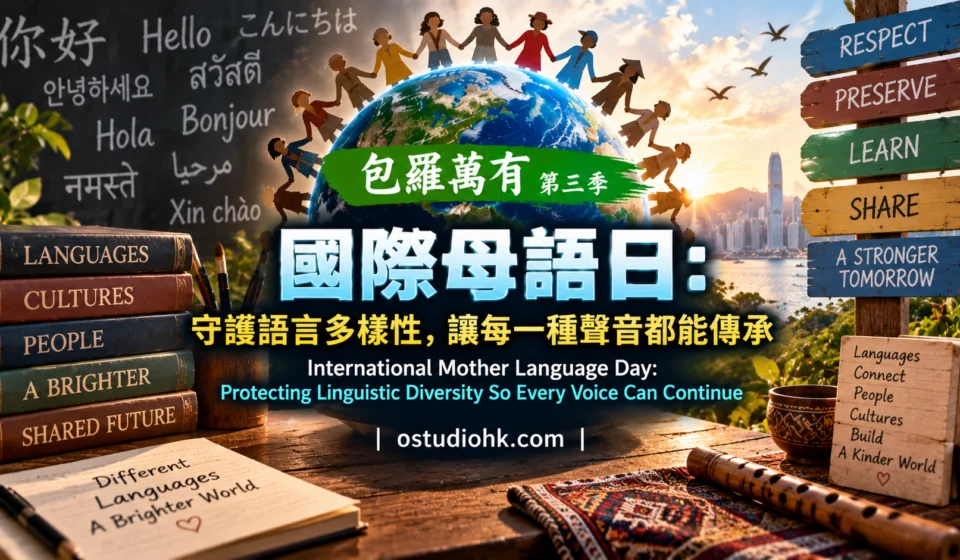
每年2月21日是國際母語日,提醒世界珍惜語言多樣性,讓母語、文化、記憶與知識代代相傳。
Every February 21, International Mother Language Day celebrates linguistic diversity and the role of language in preserving identity, culture, knowledge and belonging.
中文版本
每年2月21日是「國際母語日」(International Mother Language Day),這個日子的誕生與孟加拉的語言運動有密切關係。1952年2月21日,當時東巴基斯坦的學生和民眾為爭取孟加拉語的語言地位而參與示威,多名學生在事件中喪生。數十年後,孟加拉提出設立國際母語日的倡議,聯合國教育、科學及文化組織(UNESCO)於1999年通過相關決定,並由2000年開始在世界各地每年紀念2月21日。這個日子最初源於一場關於語言權利的歷史事件,但今天的意義已經超越單一國家,成為全球關注語言多樣性、文化傳承及多語教育的重要日子。 語言從來不只是溝通工具。一個人用甚麼語言說出自己的想法,往往與家庭、成長環境、文化背景和個人記憶密不可分。一句童年時聽過的說話、一個地方特有的稱呼、一首以母語傳唱的歌曲,甚至一句只有某個社區才完全明白的俗語,都可能承載幾代人的生活經驗。語言因此不只是文字和聲音,也是一個社會保存歷史和理解世界的方法。當一種語言逐漸消失,失去的並不只是詞彙,而可能包括傳統知識、故事、價值觀、地方記憶以及一套獨特理解世界的方式。UNESCO一直強調,語言與文化多樣性對可持續社會十分重要,多語及多文化社會可以透過語言保存和傳遞傳統知識及文化。 然而,全球語言多樣性正面對壓力。世界上存在數以千計的口語及手語,但不少語言的使用人口正在減少,部分語言甚至面臨消失風險。當年輕一代逐漸改用人口較多、社會使用範圍更廣的語言時,一些少數語言可能在家庭、學校和公共生活中的使用機會愈來愈少。如果語言沒有下一代使用,它便很難真正延續。因此,保存母語並不是單純把詞典放進博物館,而是讓語言繼續存在於家庭、教育、社區、媒體和日常生活之中。UNESCO指出,語言多樣性正受到威脅,而全球約有40%人口無法以自己使用或理解的語言接受教育,這說明語言與教育之間存在十分直接的關係。 教育尤其重要。兒童如果能夠以自己理解的語言學習,往往較容易理解課堂內容、建立學習信心和參與學校生活。這並不代表多語教育只能使用母語,而是可以讓母語成為學習基礎,再逐步接觸其他語言。這種方式可以讓學生同時保留自己的語言文化背景,又能夠獲得與更廣泛世界交流的能力。UNESCO多年來一直推動以母語為基礎的多語教育,認為語言應該成為包容、優質教育的一部分。 語言教育同時關乎下一代的身份認同。當一個孩子能夠在學校學習自己的語言,在家庭使用自己的語言,並在社會中看到自己的語言被尊重,他所接觸的教育就不只是課本上的知識,也是一種「我的文化有位置」的訊息。反過來,如果孩子長期被要求放棄自己的語言,甚至認為自己的母語沒有價值,語言便可能在一代之間出現斷層。因此,母語教育並不是把人困在自己的文化之中,而是讓人先擁有一個穩固的語言基礎,再向外學習其他文化和語言。真正的多語社會,並不是要求每個人只使用一種共同語言,而是讓不同語言可以並存,讓人們有能力跨越語言界線交流。2026年的國際母語日更加把年輕人放在重要位置,主題聚焦「Youth voices on multilingual education」,即「青年對多語教育的聲音」,強調年輕人如何參與塑造多語教育的未來。UNESCO指出,語言不只是交流工具,也是身份、學習、身心福祉和社會參與的重要部分,因此教育制度需要認識並重視每一名學習者所使用的語言。 這個方向也讓我們重新思考「母語」的意思。在不同家庭和社會中,一個人可能同時接觸兩種甚至多種語言;有些人從小在家庭使用一種語言,在學校使用另一種語言,在工作和公共生活中又使用第三種語言。因此,母語不一定只有一個固定答案。對不同的人而言,語言可能代表家庭、社區、文化傳承,也可能代表一段跨越地域的成長經歷。國際母語日所重視的,正是讓人有權使用、學習和傳承自己所屬的語言,而不是要求所有人擁有完全相同的語言背景。對香港人而言,語言同樣具有很強的生活記憶。廣東話不只是日常對話工具,還承載大量地方文化,包括俗語、歇後語、俚語、街坊稱呼、粵曲、流行歌曲、電影台詞和不同年代的生活用語。一些詞語可能在正式書面語中很少出現,但在口語裡卻能夠準確表達一種情緒或生活場景。當這些語言逐漸退出日常使用時,消失的可能不只是幾個字,而是一整套生活方式的記憶。這也是為甚麼保存語言不一定等於把語言固定在過去,而是讓它繼續有能力描述現代生活。科技正在為語言保存帶來新的可能。數碼錄音、網上字典、語音資料庫、字幕、文字識別、人工智能翻譯和語音合成,都可以協助保存和整理語言資料。對一些使用人口較少的語言而言,數碼化甚至可能成為建立新一代語言資源的重要方式。另一方面,人工智能也帶來新的挑戰。如果訓練資料主要集中在少數大型語言,小語言可能在AI時代再次被忽略。因此,未來的語言科技除了追求更準確的主流語言處理能力,也需要思考如何讓少數語言、原住民族語言和地方語言進入數碼世界。UNESCO在2026年的相關活動亦強調原住民族語言的保存、復興和傳承,並把這項工作與2022至2032年「國際原住民族語言十年」聯繫起來。 語言的未來,其實取決於是否有人願意繼續使用它。政府可以制定語言政策,學校可以推動多語教育,文化機構可以保存資料,科技公司可以建立語音和文字工具,但最終真正令一種語言活下來的,是人們每天仍然願意說、願意寫、願意教給下一代。家庭尤其重要。一個孩子是否能夠聽見祖父母的語言、學會家庭中的稱呼、理解上一代的故事,往往比一份正式文件更能決定語言是否可以自然傳承。當一種語言只存在於課本,卻沒有進入生活,它可能仍然被「保存」,但未必真正「活着」。國際母語日因此不只是紀念某一場歷史事件,也是在提醒世界,語言的多樣性本身就是人類文明的一部分。UNESCO認為,多語及多文化社會透過語言保存傳統知識和文化,而語言多樣性亦有助於促進包容、理解和不同文化之間的交流。 在全球化和數碼化的時代,人們接觸其他語言比以往更加容易。一個人可以透過互聯網學習另一種語言,觀看世界各地的影片,聆聽不同文化的音樂,甚至與另一個國家的人直接交流。全球化不一定意味着所有人最後只使用幾種大型語言,科技同樣可以成為保存地方語言的工具。關鍵在於我們是否願意讓不同語言進入新的媒體和新的生活環境。當母語可以出現在網站、影片、Podcast、電子書、遊戲、社交媒體和人工智能工具之中,它便不只是歷史遺產,而是仍然具有現代生命力的語言。國際母語日最值得我們記住的,也許就是「語言有人使用,才真正有未來」。保存一種語言不是要求所有人拒絕其他語言,而是讓人可以在學習世界語言的同時,不必放棄自己的語言。能夠說自己的母語,也能夠理解別人的語言;既保留自己的文化,也願意與其他文化交流,正是多語社會可以帶來的可能。當一個孩子能夠用自己的語言學習、說故事、表達情感,再用其他語言與世界溝通,他所擁有的不是兩個互相衝突的世界,而是更多理解世界的窗口。每年2月21日,國際母語日提醒我們珍惜這些窗口,因為每一種語言背後,都有一群人的記憶、歷史和生活。如果下一代仍然願意說,上一代的故事便可以繼續被聽見;如果更多人願意學習和尊重不同語言,人類的文化便能保留更多不同的聲音。語言可以改變,社會可以改變,科技也會繼續改變,但人類透過語言理解自己、理解他人和傳遞記憶的需要,仍然不會消失。這正是國際母語日存在的重要意義。
English Version
International Mother Language Day is observed every February 21. Its origins are closely connected with Bangladesh and the language movement of 1952, when students and members of the public in what was then East Pakistan demonstrated for recognition of Bangla. Several students were killed during the events of February 21. Decades later, Bangladesh proposed the creation of an international day dedicated to mother languages, and UNESCO approved the initiative in 1999. The observance began worldwide in 2000. What began with a specific struggle over language rights has since become a global occasion for promoting linguistic diversity, cultural heritage and multilingual education. Language is much more than a practical system for exchanging information. It carries memories, traditions, knowledge and ways of understanding the world. A word used within a family, a traditional expression, a song passed from one generation to another or a local name for a place can contain layers of cultural meaning that are difficult to reproduce in another language. When a language disappears, the loss may therefore extend far beyond vocabulary. Traditional knowledge, stories, oral history, cultural practices and particular ways of interpreting the world can also become harder to transmit. UNESCO emphasizes that linguistic and cultural diversity are important to sustainable societies because multilingual and multicultural communities use language to preserve and pass on knowledge and culture. Yet linguistic diversity faces significant pressure. Thousands of spoken and signed languages exist around the world, but many have declining numbers of speakers and some are at serious risk of disappearing. When younger generations increasingly adopt languages with wider social, educational or economic use, smaller languages may gradually lose their place in homes, schools and public life. A language cannot easily survive if it is no longer being passed naturally from one generation to the next. Preserving a language therefore means more than recording vocabulary in a dictionary or placing documents in an archive. It means creating opportunities for people to continue using that language in families, education, communities, media and everyday life. UNESCO notes that linguistic diversity is increasingly threatened and that around 40 percent of people globally do not have access to education in a language they speak or understand. Education is particularly important because children generally have a stronger foundation for learning when they can understand the language used to teach them. Mother-language-based multilingual education does not mean that students should learn only one language. Instead, their familiar language can provide a foundation from which they gradually develop additional languages and broader communication skills. This approach can allow children to retain their cultural and linguistic connections while gaining the ability to communicate beyond their immediate communities. UNESCO has promoted multilingual education for many years as an important part of inclusive and quality learning. Language education is also closely connected to identity and belonging. When children can use their language at home, encounter it in education and see it respected in society, education communicates more than academic knowledge. It tells them that their culture and experiences have a place in the wider community. By contrast, when children are repeatedly encouraged to abandon their home language because it is considered less useful or prestigious, a generational break can develop. Supporting mother-language education is therefore not about isolating people from the wider world. It can provide a secure linguistic foundation from which people learn other languages and engage with different cultures. A genuinely multilingual society does not require everyone to have exactly the same linguistic background. It creates space for different languages to coexist while giving people the ability to communicate across linguistic boundaries. The 2026 observance places young people at the centre of this discussion, with a focus on “Youth voices on multilingual education”. UNESCO highlights the role of young people in shaping the future of multilingual education and emphasizes that language is connected not only to communication but also to identity, learning, wellbeing and participation in society. The meaning of “mother language” can also vary from person to person. Many people grow up with two or more languages. One language may be used at home, another at school and another in professional or public life. For some people, language is closely connected with family; for others, it may represent a community, an indigenous heritage or a migration experience spanning several countries. International Mother Language Day does not require everyone to fit into a single definition. Its broader purpose is to recognize people’s ability to use, learn and pass on the languages that form part of their lives and identities. Hong Kong provides an interesting example of how language can carry everyday cultural memory. Cantonese is not simply a spoken means of communication. It contains expressions, sayings, jokes, forms of address, songs, films and everyday vocabulary that reflect different periods of local life. Some expressions may rarely appear in formal written language but can communicate a particular emotion or social situation with remarkable precision. When such expressions disappear from everyday use, the loss can involve more than individual words. It can mean losing parts of a shared cultural memory. Preserving a language therefore does not necessarily mean freezing it in the past. It means allowing the language to continue developing so that it can describe contemporary life. Technology is creating new possibilities for language preservation. Digital recordings, online dictionaries, speech databases, subtitles, speech recognition, machine translation and artificial intelligence can help document and organize linguistic resources. For languages with relatively small speaker populations, digitization can provide valuable opportunities to create new resources for future generations. At the same time, artificial intelligence creates another challenge. If AI training data remains concentrated in a small number of major languages, smaller languages may once again be excluded from the digital environment. The future of language technology therefore involves more than improving performance in dominant languages. It also requires consideration of indigenous, minority and regional languages so that they can participate in the digital world. UNESCO’s 2026 activities place particular attention on indigenous languages and their preservation, revitalization and transmission, within the wider framework of the International Decade of Indigenous Languages, which runs from 2022 to 2032. Ultimately, the future of a language depends on whether people continue to use it. Governments can establish language policies, schools can develop multilingual programmes, cultural institutions can preserve archives and technology companies can create digital tools, but languages remain alive when people speak them, write them, teach them and use them in ordinary life. Families have a particularly important role. Whether a child can hear grandparents speaking a particular language, learn family expressions and understand stories from earlier generations can have a greater impact on natural language transmission than any formal document. A language that exists only in textbooks may be preserved in an archival sense, but it may no longer be fully alive within the community. International Mother Language Day therefore goes beyond commemorating a historical event. It reminds the world that linguistic diversity is itself part of human civilization. UNESCO recognizes multilingualism and multiculturalism as important for preserving traditional knowledge and culture, while linguistic diversity can also support inclusion, understanding and dialogue between communities. Globalization and digital technology have made contact with other languages easier than ever. People can learn languages online, watch programmes from other countries, listen to music from different cultures and communicate directly with people across borders. Globalization does not necessarily mean that everyone must eventually use only a handful of dominant languages. Digital technology can also become a tool for preserving local languages, provided those languages are given space in modern media and everyday digital life. When a mother language appears in websites, videos, podcasts, electronic books, games, social media and AI tools, it becomes more than a historical inheritance. It remains a living language capable of expressing contemporary experiences. Perhaps one of the most important messages of International Mother Language Day is that a language has a future when people continue to use it. Protecting a language does not require rejecting other languages. People can learn international languages while continuing to speak the language of their family and community. They can preserve their cultural identity while remaining open to other cultures. A child who can learn in a familiar language, tell stories in that language, express emotions through it and then communicate with the wider world in additional languages is not living between two incompatible worlds. Instead, that child has more windows through which to understand the world. Every February 21, International Mother Language Day encourages us to protect those windows. Behind every language are memories, histories and communities. When the next generation continues to speak, the stories of previous generations can still be heard. When people are willing to learn and respect different languages, humanity retains a wider range of cultural voices. Languages will change, societies will change and technology will continue to change, but the human need to understand ourselves, connect with others and pass memories from one generation to another will remain. That is the enduring meaning of International Mother Language Day.
總結
國際母語日提醒我們,語言不只是溝通工具,也是文化、身份與歷史記憶。守護母語,就是讓不同社群的故事繼續被下一代聽見。
International Mother Language Day reminds us that languages carry far more than words. They preserve identity, culture, knowledge and memory, giving future generations the opportunity to hear and continue the stories of their communities.
