
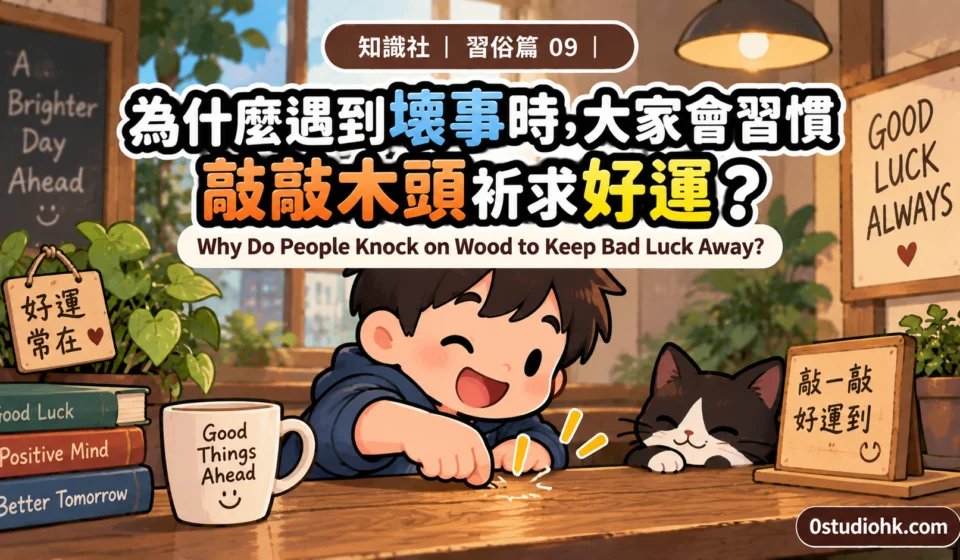
有些人說出「希望一切順利」或提到一件幸運的事情後,會順手敲幾下木頭,彷彿這個小動作可以把厄運擋在門外。「敲木頭」在英語文化中相當常見,背後更連結著古老的民間信仰。
When people mention good fortune or say they hope something will not go wrong, some will immediately knock on wood. The gesture is simple and often playful, but it comes from much older traditions involving protection, luck and the mysterious power once associated with trees and wood.
中文版本
「敲敲木頭」是一個很有趣的西方民間習俗。當一個人說「希望今年都沒有問題」、「到目前為止一切都很順利」,或者剛剛提到一件幸運的事情,旁邊的人可能會笑著說「Knock on wood」,然後真的找一張木桌敲兩下。這個動作看起來有點奇怪,因為木頭本身並沒有神奇力量,但在英語文化中,「敲木頭」已經成為一種非常容易理解的避凶求吉手勢。它最有趣的地方,就是人們往往不是因為真的相信木頭可以控制命運,而是已經把它當成一種習慣、一種玩笑,甚至是一句話的固定搭配。當一個人說:「I’ve never had a serious accident, knock on wood.」意思大概就是「我從來沒有遇過嚴重意外,希望這種好運繼續下去。」說完之後敲一下木頭,就像給自己的好運加上一道小小的保險。至於這個習俗究竟從哪裡開始,並沒有一個完全確定、得到所有歷史學者一致認同的單一起源。民間流傳的其中一種解釋,與古代人對樹木和森林的特殊想像有關。在一些古老的歐洲信仰中,樹木被認為具有特殊力量,森林也被視為可能存在神靈或超自然力量的地方。人們因此可能把觸摸或敲擊木頭理解為接觸某種保護力量。另一種說法則認為,敲木頭可能與古代基督教傳統有關,例如敲擊木頭象徵十字架。不過,這種解釋同樣缺乏足夠證據證明它就是現代「Knock on wood」習俗的唯一來源。因此,比較合理的理解是,今天的「敲木頭」很可能經過不同民間傳統長時間演變,最後形成現代英語文化中的固定習慣。這種習俗背後其實反映了一個很普遍的人類心理:當事情太順利時,我們會害怕它突然變壞。 一個人說「我最近真的很幸運」,下一秒可能就會想到:「希望不要樂極生悲。」於是,敲一下木頭,就像用一個簡單的動作打斷這種不安。這種心理在世界各地都可以找到不同形式。人類一直都希望控制一些其實無法完全控制的事情,例如健康、天氣、交通、考試、工作和運氣。當面對未知的未來時,人們很容易創造一些小儀式,讓自己感覺多了一點保障。「敲木頭」就是其中一種非常簡單的儀式。它不用花錢,也不需要特別工具,只需要找到一件木製物品,輕輕敲幾下便完成。正因如此,這個習俗非常容易流傳。它也逐漸進入日常英語。英語使用者不一定真的會敲木頭,有時只是說一句「knock on wood」便已經足夠。這表示習俗已經從實際動作變成語言的一部分。就像很多俗語一樣,原本可能具有某種具體行為,後來慢慢變成一句大家都明白意思的說話方式。最有趣的是,現代人往往知道這種做法沒有科學證據,卻仍然會偶爾做。有人敲桌子時會笑,甚至會故意說:「I have to knock on wood!」這種半認真、半開玩笑的態度,正是民間習俗在現代社會生存的一種方式。它不一定需要人們百分之百相信,只需要人們覺得「做一下又沒有壞處」。於是,一個古老的避凶動作便可以變成生活中的幽默習慣。從文化角度來看,「敲木頭」也讓我們看到不同文化面對「好運」和「壞運」時的共同心理。香港人或許比較熟悉「講好嘢唔好講到盡」、「唔好咁大聲講,費事樂極生悲」等生活智慧,也有人會用其他方式避忌。西方文化則有「Knock on wood」這種表達。兩者的具體做法不同,但背後都有一個共同想法:當事情太順利時,最好不要太過自信,希望好運可以繼續。這種心理其實非常人性化。人知道自己不能控制所有事情,所以會透過一些象徵性的動作,為未知的未來增加一點心理安全感。當然,敲木頭並不能真正改變事故發生的機率,也不能保證一個人避開疾病、意外或其他不幸。從科學角度而言,它只是一種沒有實證效果的民間迷信或習俗。但如果把它放在文化歷史中理解,就會發現它仍然具有研究價值。民俗不一定要「有效」,才值得保存。很多習俗之所以流傳,是因為它們承載著人類對生活的不安、對幸運的珍惜,以及對未來的美好願望。「Knock on wood」就是一個非常典型的例子。一句短短的說話,加上一個敲桌子的動作,就可以把人們對未知的恐懼變成一個輕鬆的小儀式。今天,當有人說「一切都很好,暫時沒有出過問題」,另一個人可能會笑著提醒:「Knock on wood。」於是,大家一起敲一下木頭,也許並不是因為真的相信它能趕走厄運,而是用一個小小的動作提醒自己:幸運值得珍惜,未來仍然充滿未知。這就是「敲敲木頭」最有趣的地方——它沒有改變世界,卻反映了人類面對世界的方法。
English Version
“Knock on wood” is one of those everyday expressions that can sound strange when taken literally. Someone might say, “I’ve never been seriously injured, knock on wood,” and then tap a wooden table. Nothing magical appears to happen, yet the gesture feels familiar to many English speakers. Today, knocking on wood is often used humorously or casually, but its background belongs to a much older world of folk beliefs about luck, protection and forces beyond human control. There is no single origin that can be established with complete certainty. One popular explanation connects the custom with ancient beliefs about trees and forests. In various European traditions, trees could be regarded as special or sacred, and forests were sometimes imagined as places inhabited by supernatural beings or spirits. From this perspective, touching or knocking on wood could have been associated with seeking protection or acknowledging a supernatural power. Another commonly repeated explanation connects the practice with Christian symbolism, suggesting that knocking on wood may have referred to touching or knocking on the wood of the cross. However, this explanation is not securely established as the definitive historical origin of the modern expression. It is therefore safer to understand “knock on wood” as a custom that may have developed through several overlapping traditions rather than as a practice that can be traced to one clearly documented event. What matters is that the custom reflects a very widespread human instinct: when something is going unusually well, people sometimes become afraid that saying so might somehow tempt fate. A person may say, “Everything has gone perfectly this year,” and immediately worry that something bad will happen next. Knocking on wood becomes a tiny ritual designed to prevent that imagined reversal of fortune. It is a way of acknowledging good luck while simultaneously expressing the hope that the luck will continue. This psychological pattern is certainly not unique to English-speaking cultures. Human societies around the world have developed rituals, sayings and gestures intended to protect people from bad luck or attract good fortune. People have always faced uncertainty about things they cannot completely control: health, weather, accidents, examinations, jobs, travel and relationships. When the future is uncertain, a symbolic action can provide a small sense of comfort or control. Knocking on wood is particularly easy to maintain because it requires almost nothing. There is no special ceremony, no expensive object and no complicated preparation. A person can simply tap a wooden desk, chair or door. Over generations, the physical action became closely connected with the words “knock on wood.” Eventually, the expression itself became more important than the actual knocking. Someone may say the phrase without touching anything at all, and everyone still understands the intended meaning. This is an interesting example of how a folk custom can become part of language. A physical ritual can gradually turn into a fixed expression, and the expression can survive even after the original belief becomes less important. Modern speakers often know that knocking on wood has no scientific ability to prevent accidents or change probability. Yet people still use the phrase. Sometimes they do it seriously, sometimes automatically and sometimes simply for fun. Someone may deliberately knock on a desk after mentioning an unusually good run of luck, then laugh at their own behaviour. This mixture of belief, habit and humour is one of the reasons the custom has survived. A tradition does not necessarily disappear when people stop taking its supernatural explanation literally. It can instead become a cultural gesture. The comparison with Hong Kong and Cantonese culture is also interesting. Cantonese speakers have their own expressions and forms of behaviour associated with avoiding bad luck, being careful about what one says and not becoming too confident when things are going well. The specific customs are different, but the underlying emotion is familiar: good fortune is precious, and nobody wants to invite trouble by becoming careless or overconfident. This suggests that superstition is not simply a matter of one culture being more “superstitious” than another. Different societies often develop different symbolic responses to the same basic human uncertainty. From a scientific perspective, knocking on wood cannot actually reduce the probability of an accident, illness or other misfortune. There is no reliable evidence that the gesture changes external events. It is therefore best understood as folklore, superstition or cultural habit rather than a practical method of protection. But that does not make it culturally meaningless. Folk customs can tell us a great deal about how people think, what they fear and what they hope for. A small gesture can preserve the memory of an older worldview long after the original explanation has faded. “Knock on wood” is particularly revealing because it turns anxiety about the future into something light and manageable. Instead of worrying silently about whether good fortune will last, a person can make a tiny gesture and move on. The ritual does not control fate, but it can express an emotion: “I hope this good thing continues.” That is why the phrase remains useful even in a modern, scientifically informed society. It has become part of ordinary conversation rather than a formal religious practice. When someone says, “So far, everything has gone well,” another person might smile and reply, “Knock on wood.” The response is usually understood immediately. Sometimes the listener actually taps the table; sometimes the words alone are enough. Either way, the expression carries a small cultural message about luck and uncertainty. In this sense, knocking on wood is not really about the power of wood. It is about the human desire to protect something good once we have it. People know that life cannot be controlled completely, yet they continue to create small rituals that make uncertainty easier to face. The gesture may not change what happens next, but it tells us something about the person making it. They appreciate their good fortune, recognize that circumstances can change and hope that tomorrow will be just as kind as today. A simple knock on a wooden table can therefore carry a surprisingly large piece of cultural history. It connects language, superstition, psychology and everyday humour in just a few seconds. The next time someone says “Knock on wood,” the phrase can be understood not simply as an odd superstition, but as a small reminder of something deeply human: when life is going well, we would very much like it to stay that way.
總結
「敲敲木頭」源自古老的避凶求吉觀念,今天已成為英語文化中的習慣用語。它未必真的能帶來好運,卻反映人類面對未知時,希望留住幸運的心理。
“Knock on wood” may not change luck, but it preserves an old human response to uncertainty. The simple gesture expresses appreciation for good fortune and the hope that it will continue.