
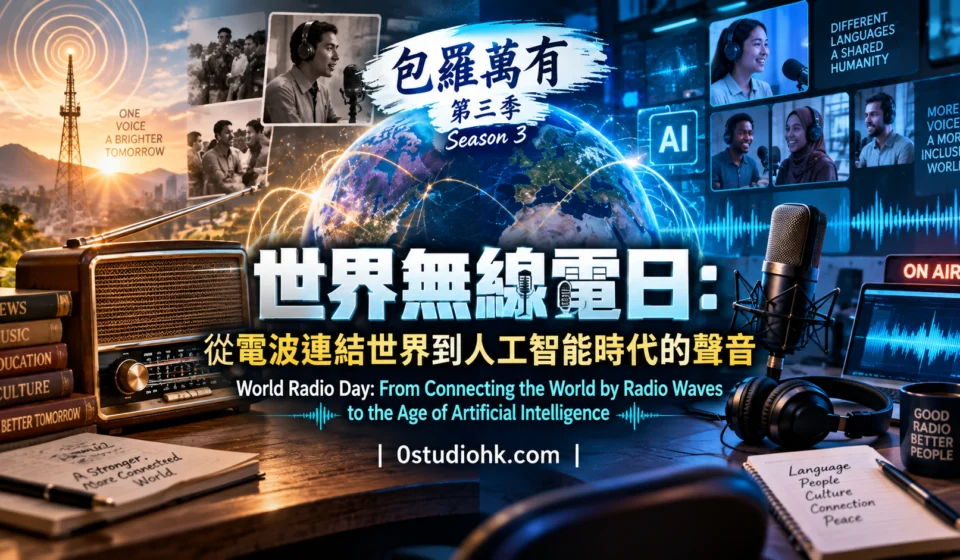
每年2月13日是世界無線電日,紀念無線電跨越地域傳遞資訊、連結社群及讓更多聲音被聽見的力量。
Every February 13, World Radio Day celebrates radio’s enduring ability to connect communities, deliver information and give people a voice across borders.
中文版本
每年2月13日是世界無線電日(World Radio Day),這個日子由聯合國教育、科學及文化組織(UNESCO)於2011年宣布,並於2012年獲聯合國大會通過,日期之所以定在2月13日,是因為聯合國電台於1946年2月13日成立,這一天因此成為回顧廣播歷史、思考聲音媒體價值以及展望未來傳播方式的重要日子。 無線電看似是一項早已存在多年的技術,但它對人類社會的影響遠遠沒有隨着互聯網、智能電話和串流媒體出現而消失。相反,無線電一直在不同年代重新尋找自己的位置,從早期的長距離廣播,到新聞、音樂、教育、公共資訊,再到社區電台、網絡電台和Podcast,聲音始終是一種能夠直接進入日常生活的媒介。它不需要觀眾一直盯着屏幕,也不一定需要高速網絡或昂貴設備,一部收音機、一個廣播訊號,便可以把資訊送到很遠的地方。聯合國指出,無線電具有廣泛接觸不同社群的能力,尤其能夠服務偏遠地區及較脆弱的群體,在緊急通訊、災害應變和公共資訊傳遞方面亦具有重要作用。 這種「聲音可以到達人」的特性,也是無線電歷久不衰的重要原因。當電力供應、互聯網或其他通訊設施受到影響時,廣播仍然可以成為傳遞消息的重要渠道。在自然災害、戰爭、危機或社區緊急事件中,一段清楚可靠的廣播訊息,有時不只是新聞,更可能是提醒居民避難、了解情況和尋求協助的重要工具。另一方面,無線電亦是一種具有公共價值的媒體。它可以讓不同社區、不同文化和不同背景的人分享自己的故事,讓地方議題得到關注,也可以成為公共討論的平台。聯合國形容無線電是促進多元聲音和民主對話的重要媒介,而世界無線電日的其中一項目標,就是提高大眾對公共服務音頻價值的認識,以及鼓勵自由、獨立和多元的廣播環境。 無線電最有趣的地方,是它既是一項科技,也是一種人與人之間的關係。廣播員的聲音、新聞主播的語氣、音樂節目的節奏、深夜節目的陪伴,甚至一個地方電台熟悉的開場音樂,都可以成為聽眾生活的一部分。很多人未必記得某一天收聽過甚麼節目,但可能會記得某把聲音陪伴自己度過一段重要的人生時光。聲音沒有畫面,卻能夠讓聽眾在腦海中建立自己的畫面,這種想像空間也是廣播獨有的魅力。進入數碼時代後,無線電並沒有停留在傳統收音機之中。網絡直播、手機應用程式、Podcast、智能喇叭以及點播平台,都令聲音內容可以在不同時間和不同設備上被收聽。傳統廣播與數碼音頻之間的界線逐漸變得模糊,一個電台節目可以同時在電波、網站、社交平台和Podcast平台出現,而一個原本只在網絡發布的節目,也可以採用廣播節目的製作方式。這種變化讓「無線電」不再只是一種傳送訊號的技術,而逐漸成為更廣義的聲音媒體生態。2026年的世界無線電日更加把焦點帶到人工智能(AI)。UNESCO將2026年的主題定為「Radio and Artificial Intelligence」,探討人工智能如何改變廣播的製作方式、聲音技術、新聞工作、可及性以及廣播機構與聽眾之間的關係。 人工智能可以協助處理錄音、即時轉錄、降噪、翻譯、字幕製作和內容整理,也可以幫助廣播服務接觸更多語言及不同能力的聽眾。例如,語音轉文字技術可以讓聽力有障礙的人更容易理解廣播內容,而語音合成和翻譯技術則有可能讓原本只服務某一種語言的內容接觸更廣泛的受眾。 對廣播工作者而言,AI亦可以成為製作工具,協助整理資料、分析內容、處理聲音或提供節目製作上的輔助。然而,人工智能進入廣播,同時帶來一個非常重要的問題:當機器可以模仿人的聲音時,聽眾如何知道自己聽到的究竟是真人,還是人工生成的聲音?這涉及透明度、同意、私隱、版權、身份以及公眾信任等問題。UNESCO在2026年的相關內容中特別提出「AI is a tool, not a voice」的理念,強調人工智能應該用來增強人的創意和專業判斷,而不是在缺乏透明度的情況下取代人的聲音或誤導聽眾。 這一點對新聞廣播尤其重要。廣播的核心不只是把聲音送到聽眾耳邊,更重要的是內容是否可靠、資料是否經過核實,以及聽眾是否知道訊息來自哪裡。在資訊流通速度越來越快的年代,AI可以提高製作效率,但速度並不等於可信度。新聞判斷、資料核實、採訪倫理和編輯責任仍然需要人作出判斷。UNESCO因此強調,科技本身不能建立信任,真正建立信任的是廣播工作者及廣播機構。 世界無線電日也提醒我們,廣播的價值並不只在於「把訊息傳出去」,還在於「讓人聽見」。當一個社區有自己的電台,一個少數語言有自己的節目,一群年輕人可以透過聲音分享生活,一個偏遠地區的人可以接觸到教育及公共資訊,無線電便不只是媒體,而是社會連結的一部分。這也是為甚麼世界無線電日一直強調多元、包容、資訊取得和自由表達。 從1946年的聯合國電台,到今天的網絡廣播、Podcast和AI輔助製作,聲音媒體已經走過很長的道路。設備變得更細小,製作成本下降,內容傳播速度更快,而聽眾亦從單純等待節目的接收者,變成可以留言、分享、創作甚至自己建立頻道的參與者。未來的廣播可能不再只有一個固定頻道,而是一個由直播、點播、Podcast、社交平台和人工智能工具共同組成的聲音世界。科技會繼續改變廣播,但廣播最核心的價值可能仍然沒有改變:有人說,有人聽,有資訊流動,也有人願意停下來聽另一個人的故事。世界無線電日因此不只是紀念一項歷史悠久的科技,也是一次重新思考聲音價值的機會。當人工智能開始能夠生成聲音、模仿語調甚至參與內容製作,人類更需要問自己,未來我們希望聽見的是甚麼樣的聲音?是更快速、更大量的內容,還是更值得信任、更有人性、更能真正連結社會的聲音?從無線電的誕生到人工智能時代,科技一直改變傳播方式,但人對資訊、故事、陪伴和交流的需要並沒有消失。也許這正是世界無線電日最值得記住的一點:無論媒介如何改變,只要世界仍然需要有人發聲,也需要有人願意聆聽,廣播與聲音就仍然會有自己的位置。
English Version
World Radio Day is observed every February 13, a date established by UNESCO in 2011 and endorsed by the United Nations General Assembly in 2012. The choice of February 13 commemorates the establishment of United Nations Radio in 1946, giving the day a direct connection with the history of international broadcasting and the development of radio as a medium for information, public communication and cultural exchange. Radio may seem like a technology from another era, yet its importance has not disappeared with the arrival of television, the internet, smartphones and streaming platforms. Instead, radio has repeatedly adapted to changing technologies and audiences. From long-distance broadcasts and news programmes to music, education, community broadcasting, internet radio and podcasts, audio continues to offer something distinctive: it can reach people without requiring them to remain focused on a screen. A radio signal can travel across large distances, while relatively simple equipment can provide access to information in places where more advanced communication infrastructure may not always be available. The United Nations highlights radio’s ability to reach diverse communities, including people in remote or vulnerable areas, and recognizes its role in emergency communication, disaster response and public information. This ability to reach people directly is one of the reasons radio has remained relevant for so long. During natural disasters, conflicts, emergencies or disruptions to other communication networks, radio can continue to provide practical information and updates. A broadcast may tell people what has happened, where to seek assistance, what precautions to take or how a community is responding. In such circumstances, radio is not simply entertainment or journalism; it can become part of a community’s communication infrastructure. Radio also has an important social function. It can provide space for different communities, cultures and perspectives to tell their own stories. Local stations can discuss issues that may receive little attention elsewhere, while public-service broadcasters can provide information intended to serve society as a whole. The United Nations describes radio as a platform for democratic dialogue and emphasizes its ability to represent diverse voices. One of the objectives of World Radio Day is therefore to promote awareness of the value of public-service audio and encourage free, independent and pluralistic radio. There is also a deeply personal side to radio. A familiar presenter, a particular programme, a piece of music or a late-night voice can become part of someone’s daily routine. Listeners may forget individual broadcasts, but they may remember how a certain voice accompanied them while driving home, studying, working late or going through an important period of life. Unlike visual media, radio leaves much of the imagery to the listener’s imagination. A voice can create a personal mental picture, making listening an unusually intimate form of communication. The digital revolution has not eliminated this experience. Instead, it has expanded the definition of radio. Live internet streams, mobile applications, podcasts, smart speakers and on-demand audio now allow programmes to reach audiences beyond traditional broadcast frequencies. A radio show can exist simultaneously on air, on a website, through social media and as a podcast, while an online audio programme can adopt many of the production techniques traditionally associated with broadcasting. The boundaries between radio and digital audio have therefore become increasingly fluid. In 2026, World Radio Day places particular attention on another major transformation: artificial intelligence. UNESCO’s 2026 theme is “Radio and Artificial Intelligence”, exploring how AI can influence broadcasting, audio production, accessibility, journalism and the relationship between broadcasters and their audiences. Artificial intelligence can assist with transcription, translation, noise reduction, audio processing, subtitles and other production tasks. It may also help broadcasters reach people who previously faced barriers to accessing audio content. Automatic transcription can make programmes more accessible to people with hearing difficulties, while speech synthesis and translation technologies may allow content to be delivered in more languages and formats. For radio professionals, AI can function as a production assistant, helping organize information, process recordings, analyse material or support editorial workflows. But the arrival of synthetic voices creates an important new question: when machines can reproduce human speech with remarkable realism, how can listeners know whether the voice they hear belongs to a real person or has been artificially generated? This question involves transparency, consent, privacy, copyright, identity and public trust. UNESCO’s 2026 guidance uses the idea “AI is a tool, not a voice”, emphasizing that artificial intelligence should support human creativity and professional judgement rather than silently replacing human identity or misleading audiences. This distinction becomes particularly important in journalism. Broadcasting is not simply about transmitting sound; it is also about whether information is accurate, whether sources have been checked and whether audiences understand where information comes from. In an environment where AI can produce content extremely quickly, speed should not be confused with reliability. Editorial judgement, fact-checking, journalistic ethics and accountability remain essential. UNESCO makes this point clearly: technology itself does not create trust; broadcasters do. World Radio Day therefore remains relevant not only because of the technology of broadcasting, but because of the human relationship behind it. When a community has a local station, when a minority language has access to programming, when young people can tell their stories through audio, or when people in remote areas can receive educational and public information, radio becomes more than a communication system. It becomes part of the social fabric. This is why World Radio Day continues to emphasize diversity, inclusion, access to information and freedom of expression. From United Nations Radio in 1946 to today’s livestreams, podcasts and AI-assisted production, audio media has travelled through a remarkable technological transformation. Production equipment has become smaller and more affordable, distribution has become faster and audiences have become more active. Listeners are no longer simply people waiting for a scheduled programme. They can comment, share, create their own shows and build communities around specific interests. The radio of the future may therefore be less about a single frequency and more about an ecosystem connecting live broadcasting, on-demand audio, podcasts, social platforms and artificial intelligence. Technology will continue to reshape broadcasting, but the fundamental value of radio may remain remarkably familiar: someone speaks, someone listens, information moves, and people connect through stories. World Radio Day is consequently more than a celebration of an old communication technology. It is an opportunity to reconsider what we expect from sound in a rapidly changing media environment. As artificial intelligence becomes capable of generating voices, imitating speech patterns and assisting with production, society must also consider what kind of voices it wants to hear. Should the future simply deliver more content at greater speed, or should technology help create audio that is more trustworthy, accessible, inclusive and genuinely connected to human experience? From the earliest radio transmissions to today’s AI-enabled media, technology has repeatedly changed how information travels, but the human need for knowledge, storytelling, companionship and communication has remained. That may be the enduring lesson of World Radio Day. The medium can change, the devices can change and the production process can change, but as long as people need to speak, people need to listen, and communities need ways to remain connected, radio and audio will continue to have a place in the world.
總結
世界無線電日見證聲音媒體由傳統電波走進數碼與AI時代。科技改變廣播方式,但資訊、對話、陪伴與讓不同聲音被聽見的價值,仍然沒有改變。
World Radio Day shows how radio has evolved from traditional broadcasting into a digital and AI-enabled medium. Technology changes how audio is created and delivered, but its human purpose—informing, connecting and giving people a voice—remains.