
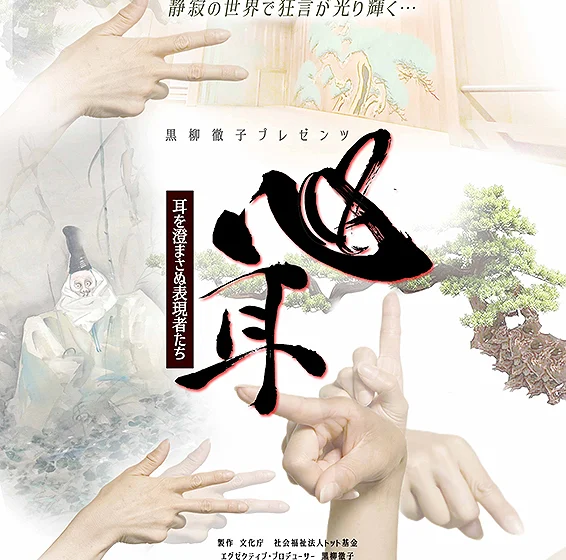
四十多年來,黑柳徹子與日本聾人劇團持續以手語演繹狂言,讓聽障表演者走上傳統藝術舞台。本片記錄他們的藝術追求、嚴格訓練,以及手語狂言走向世界的歷程。
For more than four decades, performers from the Japanese Deaf Theatre have explored classical Kyogen through sign language. This documentary enters their rehearsals, performances and backstage world, revealing how a traditional art form can find new expression beyond sound.
電影內容|中文版本
《心耳 耳を澄まさぬ表現者たち》是一部以「手語狂言」為主題的日本紀錄片,將鏡頭對準一群以手語挑戰日本古典藝能的聽障表演者,並回顧這項特殊藝術活動四十多年來的發展。手語狂言始於1980年代,源自黑柳徹子的構想,由日本聾者劇團持續推動至今。四十多年來,劇團不但在日本各地演出,更曾走上海外舞台,讓原本以語言、聲音與節奏為重要元素的狂言,以另一種方式與不同文化背景的觀眾交流。手語狂言的演出一直受到觀眾支持,門票經常售罄,亦逐漸成為日本傳統藝能與聽障文化交流的重要藝術實踐。電影並非只停留在舞台上的演出,而是從多個角度探索手語狂言究竟如何成立,以及它與傳統狂言之間存在甚麼不同。作品收錄劇團海外演出《瓜盗人》的珍貴影像,同時透過相關人士的訪問與證言,重新梳理手語狂言一路走來的歷史與發展。觀眾亦會看到演出背後鮮為人知的一面,包括演員面對的嚴格訓練、反覆排練的過程,以及正式登台前後的幕後工作。這些片段讓電影從單純記錄演出,進一步進入表演者的創作世界,理解他們如何透過身體、手勢、表情與節奏去建立狂言所需要的戲劇性與幽默感。影片其中一個重要方向,是探討「聽不見聲音」是否代表無法表達傳統戲劇。手語狂言並沒有簡單地把原有狂言翻譯成手語,而是在既有古典藝能的基礎上,尋找適合視覺語言的表達方式。手語、動作、表情以及舞台調度因此成為重要的溝通工具,令觀眾可以從另一個角度感受狂言的節奏與人物關係。電影亦訪問多位長期參與手語狂言的人士,包括與黑柳徹子共同支持這項活動的日本聾者劇團創立成員之一井崎哲也、劇團代表江副悟史,以及親自運用手語指導劇團的和泉流狂言師三宅近成。不同人物的經驗交織在一起,讓觀眾看到手語狂言並不是單一人士的創作,而是一項由表演者、導師、劇團成員及支持者共同維繫的長期文化活動。作品同時將視野延伸到海外,探討日本傳統狂言經過手語重新詮釋後,在不同文化環境中如何被理解與接受。這也使電影不只是關於聽障人士或表演藝術的紀錄,更涉及文化傳承、藝術表達與跨文化交流等議題。當一種傳統藝術離開原本熟悉的語言和聲音框架,它仍然可以透過另一套視覺語言延續下去,而觀眾對這種形式的理解,也可能因自身背景與觀看方式不同而產生新的感受。《心耳 耳を澄まさぬ表現者たち》由藤井秀剛執導,黑柳徹子擔任執行製作人,亦是藤井秀剛首次挑戰紀錄片形式的作品。電影透過舞台演出、歷史影像、訪問、排練與幕後紀錄,把四十多年手語狂言的發展濃縮成一段充滿藝術與文化意義的影像旅程。作品的核心並不是強調「不能聽見」本身,而是把焦點放在表演者如何以另一種方式感受、理解和傳達古典藝術。從這個角度來看,手語狂言既是對傳統的延續,也是一次重新思考「表演究竟依靠甚麼與觀眾溝通」的藝術實驗。它讓狂言從聲音世界走向視覺世界,也讓觀眾重新發現身體、表情、動作和空間本身所具有的表達力量。作為一部人物與文化紀錄片,《心耳》最重要的價值,在於保存這群表演者長期投入傳統藝能的足跡,同時記錄手語狂言如何從一個1980年代開始的構想,逐步發展成能夠登上日本及海外舞台的藝術形式。
English Version
Shinji: Performers Who Do Not Listen With Their Ears is a Japanese documentary centered on sign-language Kyogen and the deaf performers who have spent decades exploring one of Japan’s classical performing arts through a visual form of expression. The project began in the 1980s following an idea proposed by Tetsuko Kuroyanagi and has been carried forward by the Japanese Deaf Theatre for more than forty years. During that time, the company has developed a distinctive artistic practice that has attracted audiences in Japan and has also travelled overseas, introducing a different way of experiencing Japanese traditional theatre to audiences beyond the country. The documentary looks beyond the finished performances to examine how sign-language Kyogen is created, rehearsed and performed. It includes rare footage from an overseas presentation of Uri Nusubito, together with interviews and testimony from people who have been closely involved with the development of the art form. The film also takes viewers into demanding rehearsal sessions and behind-the-scenes spaces, offering a view of the discipline and preparation required before the performers step onto the stage. These sequences are important because they shift the focus away from the idea of simply translating spoken Kyogen into sign language. Instead, the documentary explores how performers use visual communication to build character, rhythm, comedy and dramatic relationships. Hand movements, facial expressions, physical gestures, timing and stage movement become central elements of the performance. In conventional Kyogen, spoken language and vocal delivery play an important role in communicating the story and the humor. Sign-language Kyogen approaches the same traditional material from a different expressive framework, creating questions about what can be preserved, transformed or newly discovered when an established art form is experienced without relying on spoken sound. The documentary brings together the perspectives of several people who have supported the development of sign-language Kyogen over many years. Among them are Tetsuya Izaki, one of the founding members of the Japanese Deaf Theatre who worked alongside Kuroyanagi in supporting the project; Satoshi Ezoe, who serves as the theatre company’s representative; and Chikashige Miyake, a Kyogen performer from the Izumi school who personally uses sign language while working with the performers. Their experiences provide different perspectives on an artistic activity that has depended on the cooperation of performers, teachers, theatre members and long-term supporters. The film also considers how sign-language Kyogen has been received outside Japan. When an element of Japanese classical culture is presented through a visual language rather than primarily through spoken Japanese, audiences from different cultural and linguistic backgrounds may encounter the work in new ways. The overseas performances therefore become more than examples of international touring; they provide an opportunity to consider how traditional art can cross cultural boundaries while retaining its connection to its original form. At the same time, the documentary presents the performers not simply through the framework of disability, but as artists engaged in a demanding creative practice. Their work demonstrates how the human body can become a sophisticated medium for theatrical communication. Gesture, expression, movement, timing and space all contribute to the construction of a performance, allowing audiences to experience elements of Kyogen through sight as well as through the traditional expectations of sound and speech. This approach gives the documentary a broader cultural dimension. It asks what makes a traditional performance recognizable, how much of an art form can change while remaining connected to its heritage, and how different forms of communication can open classical culture to new audiences. The title’s reference to people who do not listen with their ears points toward this central idea: experiencing and communicating art does not necessarily depend on hearing. The documentary instead directs attention toward another kind of listening, one based on observation, physical presence and visual expression. Directed by Shugo Fujii, known for works including ONPAKU and Cho Gitaijin Genkan, the film marks his first documentary feature. Kuroyanagi serves as executive producer, continuing her long association with sign-language Kyogen and the Japanese Deaf Theatre. Through archival material, overseas performance footage, interviews, rehearsals and backstage scenes, the film traces more than four decades of artistic activity and gives audiences an opportunity to understand the people behind it. Ultimately, Shinji is both a portrait of performers and a record of cultural transmission. Its subject is Kyogen, but its wider concerns include accessibility, artistic expression, cultural heritage and communication across different languages and forms of perception. By documenting performers who have devoted themselves to sign-language Kyogen for decades, the film shows how a classical Japanese art form can continue to evolve while remaining connected to its historical roots.
電影資料|Film Information
導演: 藤井秀剛(Shugo Fujii)
執行製作人: 黑柳徹子(Tetsuko Kuroyanagi)
類型: 紀錄片、傳統藝能、文化、人物
上映年份: 2026年
主要演員
井崎哲也、江副悟史、三宅近成
日本聾者劇團成員
作品特色|中文版本
作品以四十多年歷史的手語狂言為核心,深入劇團排練、舞台與海外演出,記錄聽障表演者如何以手語、身體與表情重新詮釋古典狂言,同時探索傳統藝術、文化傳承與跨語言交流的可能性。
Highlights|English
The film offers an intimate look at more than forty years of sign-language Kyogen, combining rare performance footage, interviews, rehearsals and backstage scenes. It explores how deaf performers use movement and visual expression to reinterpret classical theatre and connect Japanese tradition with audiences around the world.